
Prosthetics for the Stars
From Mars colonies to deep-space missions – xAI-powered enhancements that adapt to zero-gravity, radiation, and interstellar challenges. Because the future is not just on Earth.
Why Space Needs Advanced Prosthetics
Space presents unique challenges that terrestrial prosthetics simply cannot address. Microgravity causes muscle atrophy and fluid shifts – prosthetics must auto-adjust in real-time. Electronics need radiation hardening. EVA suits demand seamless integration.
Long-duration missions require reliability without resupply, while habitat construction, mining, and resource operations demand enhanced performance beyond human baseline.
With xAI intelligence, Neuralink-inspired interfaces, and rugged materials from SpaceX engineering, we create limbs that not only restore but augment space pioneers – veterans leading the charge, civilians becoming interstellar citizens.
0.38g
Mars Gravity Adaptation
100%
Radiation Shielded
5+ yrs
Mission Reliability
Boost
Orbital Productivity
Space-Adapted Features
Every component engineered for the extreme demands of space exploration and colonization.
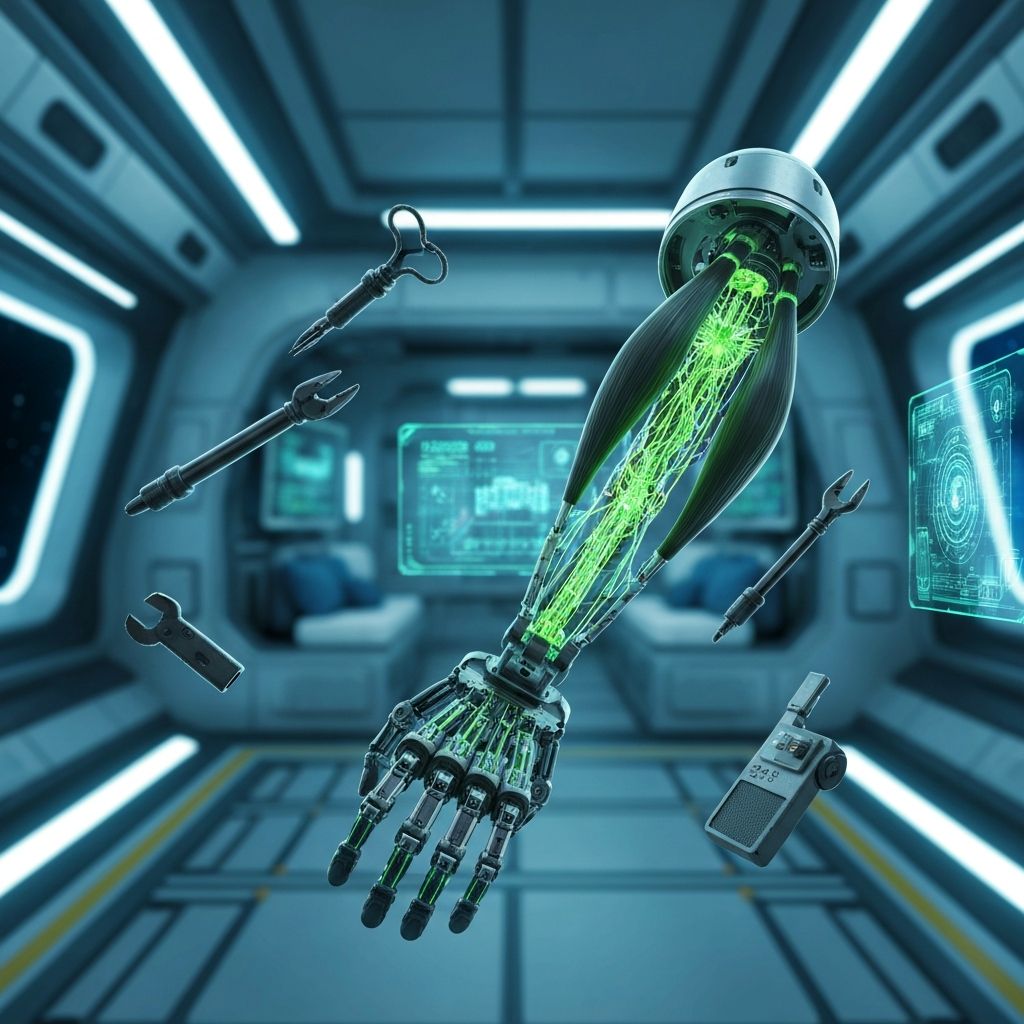
AI (Grok-level) predicts and counters microgravity effects with dynamic joint stiffness. No hydraulic fluid risks – using electroactive polymers and solid-state actuators.
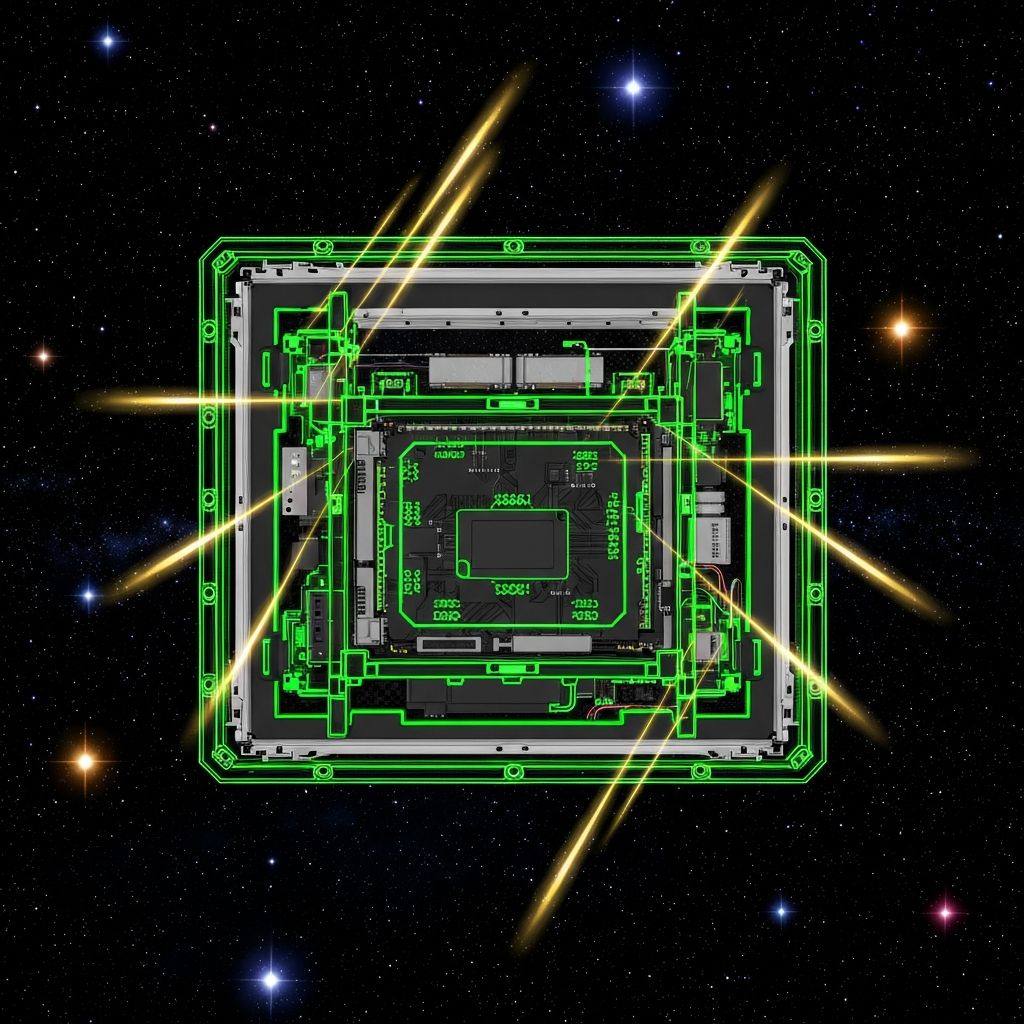
Shielded electronics and self-healing polymers drawing from NASA/ESA tests on synthetic muscles. Built to withstand cosmic radiation on multi-year missions.
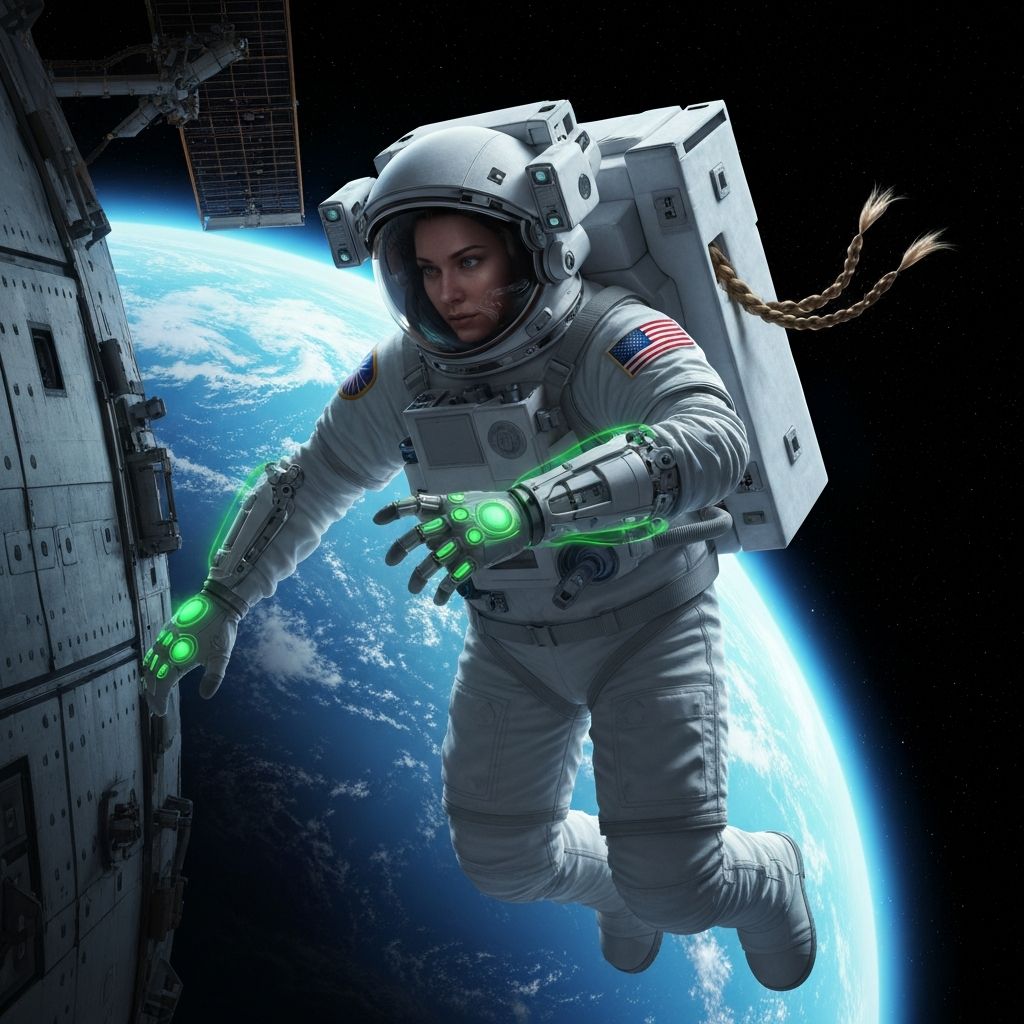
Seamless docking with spacesuits, haptic feedback through gloves, and enhanced grip strength for tools in vacuum and low-G environments.
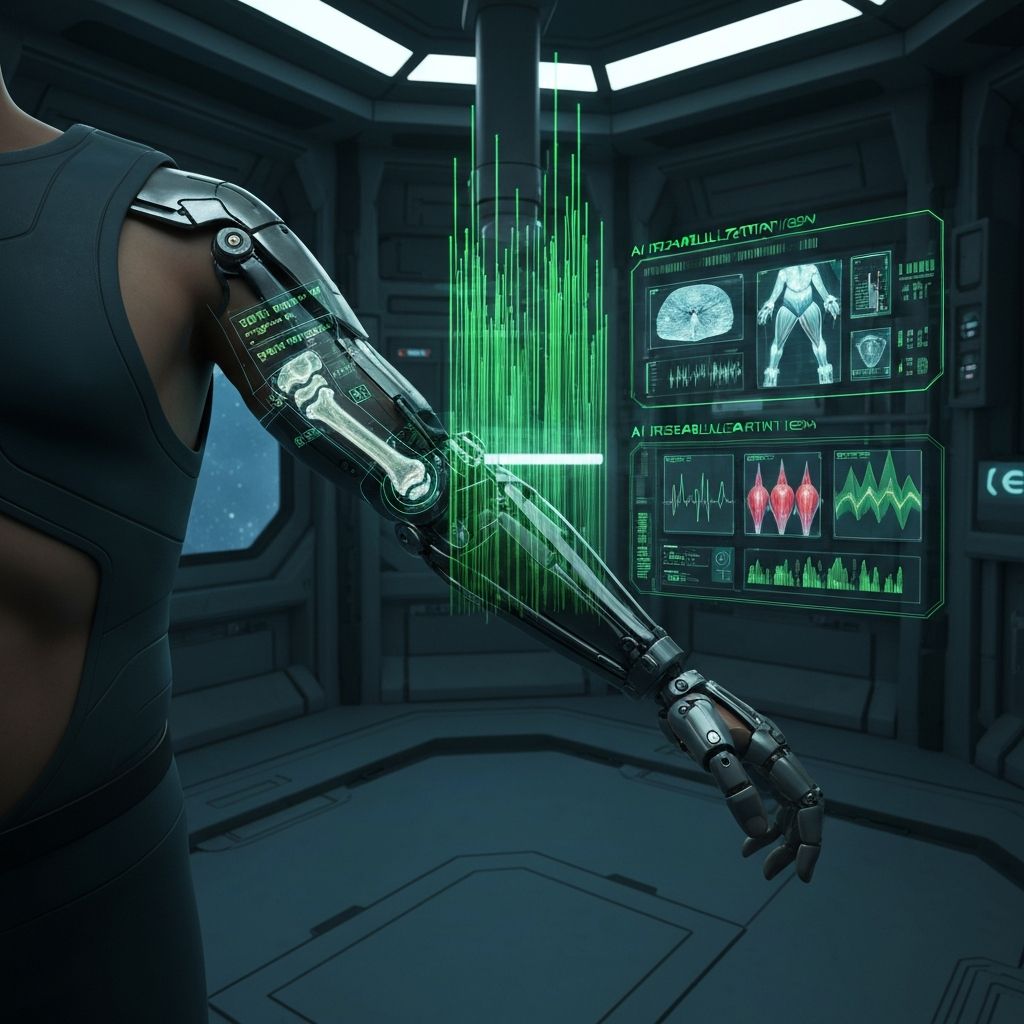
Built-in sensors track bone density and muscle health, feeding data to onboard AI for rehabilitation in space – preventing atrophy on long-duration missions.
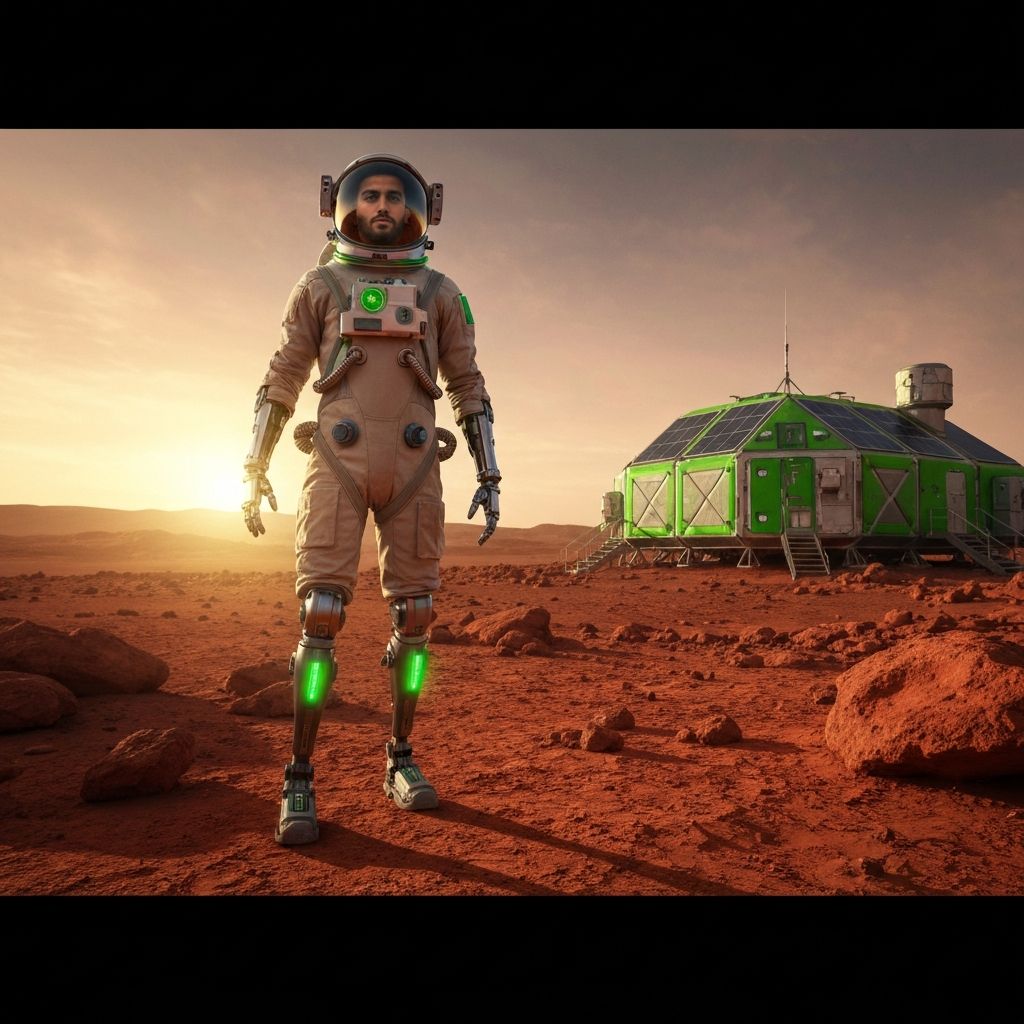
Thought-controlled precision for remote operations, energy-efficient designs for solar-powered habitats, and modular swaps for Mars gravity (0.38g) transitions.
Real-World Momentum
Building on cutting-edge research and partnerships to make space-ready prosthetics a reality.
First
Amputee Astronauts Enabled
30-50%
Orbital Construction Boost
5+ Years
Mission Duration Support
0g - 1g
Gravity Range
ESA Parabolic Flight Tests
John McFall's Ampu-T2 experiment tests prosthetics in microgravity conditions aboard ESA parabolic flights.
ISS Synthetic Muscle Trials
Early synthetic muscle and electroactive polymer testing aboard the International Space Station.
In ProgressNASA Exoskeleton Integration
Collaboration with NASA on next-gen suit flexibility and prosthetic-EVA integration protocols.
Artemis Crew Enhancement
First xAI prosthetics certified for lunar missions as part of the Artemis program.
Mars Pioneer Program
SpaceX Starship crew enhancements – battle-tested durability for armed forces vets on Mars missions.
ESA Fly! Spotlight: Paving the Way for the First Amputee Astronaut
ESA's groundbreaking Fly! project is proving that physical disability is no barrier to space exploration. Led by astronaut reserve John McFall—a through-knee amputee, former Paralympic bronze medalist (100m sprint, 2008), and orthopedic surgeon—this initiative overcomes historical barriers for long-duration ISS missions. In 2025, McFall became the first person with a physical disability medically cleared for extended spaceflight.
The Ampu-T2 experiment tested his 'smart' mechatronic knee and running blade in microgravity during over 90 parabolas on ESA's Zero G aircraft (May 2025, Bordeaux). Activities included squatting, walking, jogging, and running on a treadmill with harness/elastic cord simulation of body weight (mirroring ISS setups). Results validate adaptive prosthetics in zero-G, optimal configurations for daily activities, and sensor performance—directly informing radiation-hardened, suit-integrated designs for Artemis, Mars, and beyond.
This resilience embodies the strong values we need in space pioneers: rebuilding after loss, excelling under pressure, and pushing humanity multi-planetary.
John McFall – ESA Reserve Astronaut
Former Paralympian & orthopedic surgeon
- Paralympic bronze medalist (100m sprint, 2008)
- Selected as ESA astronaut reserve 2022
- Medically cleared 2025 for long-duration ISS missions
Ampu-T2 Experiment (2025)
First lower-limb prosthesis test in microgravity
- 90+ parabolas (~22s weightlessness each)
- Tested mechatronic knee & blade stiffness
- Harness setup simulates body weight for treadmill
Fly! Project Impact
Expanding possibilities for space exploration
- No major showstoppers for amputee ISS missions
- Expands astronaut diversity & inclusion
- Informs zero-G adaptations for xAI prosthetics
Why It Matters
Resilience wins in space
- Proves unwavering human determination
- Ties to our Zero-G Adaptive Control features
- Enables vets & pioneers to thrive off-Earth
Join the Interstellar Movement
Researchers, SpaceX ecosystem partners, and investors – let us collaborate on prototypes for Artemis, Mars, and beyond.